

Thomas A. Berry and Alexander Xenos

The government must be neutral when it sets rules for what private citizens may say, but the government need not be neutral when it speaks itself. Government advertisements urging Americans to buy war bonds need not be counterweighed by an equal number of government advertisements urging Americans not to buy war bonds. The government-speech doctrine formalizes this rule and lets the government articulate its own positions free of First Amendment neutrality rules.
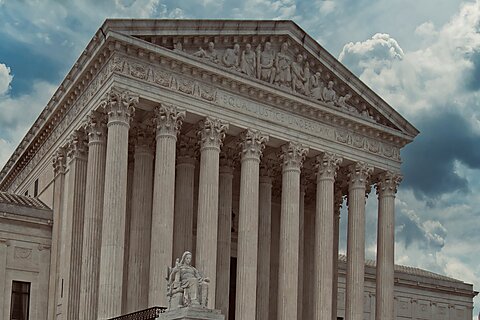
But the Supreme Court has warned that courts must apply that doctrine with “great caution” lest the government recharacterize private speech as its own and suppress disfavored viewpoints. The First Amendment forbids the government from compelling a private speaker to adopt a state-approved message. The Court now has an opportunity to police that limit in Khatibi v. Lawson.
California requires physicians to complete continuing medical education (CME) courses to maintain their medical licenses. In 2019, the State enacted legislation requiring nearly all CME courses to include instruction on “implicit bias.” The implicit bias mandate forces private speakers (the CME teachers) to craft messages that align with the government’s views on a politically sensitive issue.
A physician instructor and an organization representing medical and policy professionals sued the Medical Board of California, arguing that the mandate compels speech in violation of the First Amendment. But the district court held that their lectures were government speech and therefore unprotected. The Ninth Circuit affirmed, reasoning that California’s longstanding regulation of the medical profession, the public’s likely perception, and the State’s asserted control over accredited CME sufficed to transform privately created instruction into the government’s own expression. Now the law’s challengers have asked the Supreme Court to review the decision, and Cato has filed an amicus brief in support of that petition. Our brief makes three principal arguments.
First, the government-speech doctrine lets the government speak for itself; it does not let the government force private parties to create favored messages and then claim ownership of that speech. Petitioners create and teach their own courses without government supervision, approval, or control.
Second, the consequences of the Ninth Circuit’s reasoning could be profound. If California may convert private CME instruction into government speech merely by attaching credit to state-mandated content, then the same logic extends far beyond medicine. States could use occupational-licensing regimes to censor and dictate continuing legal education, accounting seminars, engineering instruction, counseling programs, and countless other forms of private professional speech. The more aggressively a state regulates, the more easily it can claim that the resulting speech belongs to the government. That flips the First Amendment on its head.
Third, California has conscripted private physicians to teach a theory that is, at best, unvalidated and, at worst, damaging. Not only does the scientific literature not support the use of implicit bias training (IBT), but mandatory training, like that of California’s, has been shown to increase bias. Indeed, many leading proponents of the implicit bias theory, including one of its cofounders, have come out against mandatory IBT. Some scholars have proposed abandoning implicit bias interventions altogether and focusing instead on addressing actual discrimination. Even the concept of implicit bias itself has been questioned in the literature.
We urge the Court to grant the petition and reaffirm that the government-speech doctrine is not a tool to compel private speech.