

Jai Kedia and Norbert J. Michel

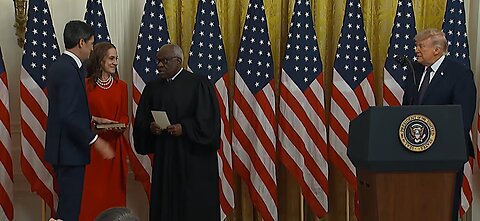
Kevin Warsh was sworn in as the new Federal Reserve chair today. He has described his goal as “regime change,” and that’s a great goal. Since the COVID-19 pandemic, the Fed has failed time and again to bring inflation back down to its 2 percent target. Consumers have suffered as a result, and affordability is now the chief political concern for the electorate. The Fed’s balance sheet has remained bloated ever since the 2008 crisis-era programs, and its institutional footprint has grown too large. Warsh’s instincts are right on each of these issues. This post presents five concrete proposals—drawn from Cato’s Reforming the Federal Reserve series—that would help Warsh achieve his regime change.
1. Reopen the monetary policy framework review. The Fed conducts a formal review of its monetary policy framework every five years. The Fed’s 2025 framework review undid the worst features of the 2020 framework—the asymmetric reaction function and flexible average inflation targeting that exacerbated the post-pandemic inflation surge—but it left the deeper problem untouched. The Fed continues to set policy based on discretionary, forecast-driven judgments rather than a transparent rule tied to observable conditions. That same approach gave us “transitory” inflation in 2021.
Importantly, the review process itself was flawed. A recent paper by Bryan Cutsinger, Peter Ireland, and William Luther shows that the review’s outcome was effectively preordained: The major changes ultimately adopted were already telegraphed in the minutes of the first three Federal Open Market Committee (FOMC) meetings of 2025, before most “Fed Listens” events and other key conferences had even taken place. External input arrived after internal deliberations had already settled the result. The revised framework then preserved the FOMC’s optionality rather than constraining its discretion. (Giving the FOMC flexibility around its own inflation target without a binding rule is functionally equivalent to giving the FOMC total discretion.)
The next scheduled review is in 2030, but that is too long to wait. Tariff-driven price pressures are still present; April inflation was much higher than expected; and energy markets remain volatile. Warsh should not remain tied to the previous regime. He should reopen the review immediately and use it to implement meaningful changes such as those listed below, not merely tweak around the edges of an institution that needs substantive reform.
2. Shrink the balance sheet and constrain future expansions. Warsh has long argued that the Fed should shrink its $6.7 trillion balance sheet. The next step is a concrete target and timeline to shed assets, paired with restrictions on the composition of Fed holdings. The Fed should trade only short-term Treasuries and exit its mortgage-backed securities position. Those holdings blur the line between monetary and fiscal policy and distort housing finance.
Equally important is constraining the next round of quantitative easing (QE) before it happens. The political temptation to deploy large-scale asset purchases in the next downturn will be every bit as strong as it was in 2008 and 2020, and the post-pandemic experience demonstrates that the inflationary costs of unconstrained QE can be severe. Legislative guardrails and ex-ante commitments against using QE in future crises are the surest ways to prevent a repeat.
3. End interest on reserves. Paying interest on reserves contributed to roughly $200 billion in combined Fed operating losses in 2023 and 2024 and creates a direct conflict between the Fed’s price-stability mandate and its own balance sheet position. Returning to a pre-2008 corridor system would restore the discipline of a scarce-reserves regime and eliminate what amounts to large cash transfers from taxpayers to large banks. This reform pairs naturally with balance sheet reduction: Assets and liabilities are two sides of the same coin, and meaningful reform requires addressing both.
The timeframe to end interest on reserves must be chosen carefully. If set too soon, it could push trillions of dollars in bank reserves into the broader economy in too short a time, fueling inflation. The cleanest mechanism is for Congress to set a statutory end date for interest on reserves and balance sheet reduction scheduled 10 to 15 years out, roughly the time it took the Fed to build the balance sheet to its current size.
4. Commit to rules-based monetary policy. Warsh has rightly criticized the Fed’s reliance on forward guidance and discretionary fine-tuning. The logical next step is a public commitment to a rules-based framework for setting the policy rate. Under such a system, the Fed would publish an arithmetic rule connecting the interest rate target to values of key macroeconomic indicators such as inflation. If the FOMC deviated from its rule, the Fed chair would be required to appear before Congress to explain exactly how and why the FOMC deviated from the rule. Most common academic rules offer similar policy recommendations and result in similar macroeconomic outcomes—virtually all are better than Fed discretion. In fact, multiple versions of a rule-based reaction function would have prevented the Fed’s slow response to demand-driven inflation in 2021.
Rules also help with Fed independence. When the Fed sets rate targets based on subjective economic assessments, the chair will spend much of his or her term defending those judgments against the charge that they were politically motivated. Similarly, the lack of a policy rule leaves the Fed chair vulnerable to attacks from politicians, such as a president openly demanding rate cuts. A binding rule resolves these kinds of problems at the source, providing all the political cover necessary to implement appropriate monetary policy. Put differently, the Fed’s policy independence is best protected not by repeated personal assurances but by a framework that removes the chair from the daily political crossfire.
5. Plan for fiscal dominance. Federal debt now exceeds $38 trillion, and interest costs are projected to consume a rising share of federal revenues over the coming decade. The risk that fiscal pressure eventually compromises the Fed’s willingness to tighten when needed, a modern echo of the pre–1951 Treasury Accord problem, is real and growing. A rules-based framework is the first line of defense, but statutory constraints on the Fed’s ability to absorb federal debt are also necessary. Warsh should support such constraints proactively before the political pressure to monetize debt becomes overwhelming.
Conclusion
Warsh was direct at his hearing that the Fed should not pursue agendas where it has neither authority nor expertise and that it performs best when focused on its statutory mandate. Again, Warsh is right—the central bank should not get involved in areas where its tools are ill-suited and its democratic accountability is weakest, areas such as climate change and industrial policy. There are also several ways that Congress can help keep the Fed narrowly focused on monetary policy, such as removing the Fed from financial regulation and repealing financial stability mandates.
A rare opportunity now exists for achieving major monetary policy improvements. The incoming Fed chair wants regime change; Congress is increasingly interested in Fed accountability; and the American public has lived through years of failed monetary stewardship. Implementing the reforms listed here will support Warsh in a successful Fed chairmanship.