


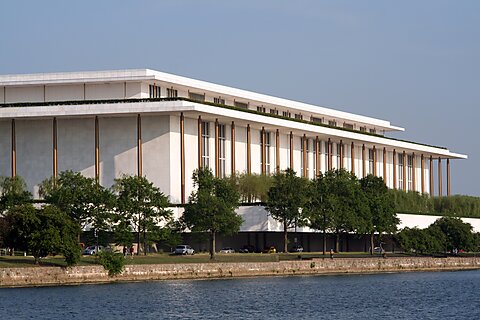

Since starting his second term, President Trump has attempted to control the Kennedy Center, including its name, board, and programming. The Kennedy Center is a performing arts institution first imagined as a national cultural center and later designated as a memorial to President Kennedy. The Center is federal property and operates as a public-private partnership. Its board controls operations yet is appointed by the president, and funding comes from both federal dollars and the Center’s own revenue.
Trump’s actions have created controversy, with artists canceling performances and patrons leading weekly protests. This politicization illustrates the cost of federal involvement. And it raises a broader issue neither Trump nor his critics have addressed: whether the government should be involved in the Kennedy Center at all.
The usual justification for government intervention is market failure. A polluting activity, for example, imposes costs on individuals outside of the relevant transaction. National defense requires government involvement because everyone benefits from protection, regardless of who pays, creating a free-rider problem.
Conversely, the private sector is perfectly capable of supplying performing arts, assuming demand is sufficient. Individuals who participate in the arts receive the benefit, and those who do not can be excluded; there is no externality or public-goods problem that requires government intervention.
The way to avoid controversy about the Kennedy Center, therefore, is to eliminate all government involvement.
Cross-posted from Substack. Isadora Millay, a student at Harvard College, co-wrote this piece.