


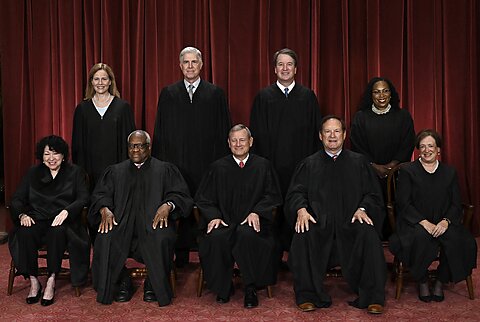
In Trump v. Barbara, the Supreme Court invalidated President Trump’s executive order that banned birthright citizenship for illegal or temporary residents of the United States.
- Courts keep finding that DHS and Trump are violating the Constitution in their immigration agenda. In my recent congressional testimony, I documented 28 cases in which courts have found the administration’s immigration actions unconstitutional, including violations of the First, Fourth, Fifth, Tenth, and Fourteenth Amendments. This case is the third time the Supreme Court has found Trump’s immigration actions to be unconstitutional, with the other two being rebukes of his denial of due process to people deported under the Alien Enemies Act.
- The decision is crucial to protect all Americans’ rights. As has been extensively documented in cases in Minnesota and Los Angeles, DHS deliberately stops individuals without evidence that they have violated any laws to interrogate them about their citizenship. I have shown that between one-fifth and one-quarter of all ICE arrests are of people who have not been charged with any crime and do not have an order of removal against them—people whom there would be no reason to seek out specifically. Since DHS agents ignore assertions of citizenship and even “REAL IDs,” the birth certificate is the only bulletproof way to prevent DHS from detaining and deporting you. Without birthright citizenship, Americans would have to supply evidence of their parents’ immigration status at their birth.
- The majority opinion did not cite the fact that the Fourteenth Amendment granted citizenship to the children of illegal immigrants at the enactment. The only “deportable aliens” in 1868 were slaves trafficked into the United States in violation of the prohibition on the slave trade. Jack Chin and Paul Finkelman have a detailed article on this point in which they note that deportations of slaves were not merely hypothetical but had actually occurred.
- Despite their votes, no justice agreed with the executive order in full.
- Justice Clarence Thomas asserts that citizenship should be based on where someone’s parent is domiciled and on their intent to remain. But the executive order is based on legal status, not residence.
- As fellow dissenter Neil Gorsuch notes, this rule would grant citizenship to domiciled illegal immigrants, which he doesn’t rule out. In the absence of a congressional statute, it would also seemingly limit citizenship for children born to US citizens in the United States when their parents’ residence is abroad.
- Justice Alito thinks it should be based on whether the child gets citizenship from a foreign country at birth, but he admits that this would grant citizenship to some children of illegal immigrants. Alito seems to acknowledge that this interpretation could affect the citizenship of some children of naturalized citizens as well.
- Only Justice Kavanaugh defends the scope of the executive order itself, but then finds that it violates Congress’s statute. I think they’re all in conflict because their underlying theory has no historical, legal, or textual basis.
- The issue isn’t as dead as it should be. Unfortunately, because there are four votes in favor of some kind of restrictions on birthright citizenship, opponents will continue the fight. President Trump has already urged Congress to pass a law, and multiple senators have already filed legislation on the point. A majority of the current Court would strike down that statute, regardless of what it says, based on the reasoning in this decision. But presumably, conservatives plan to play the long game, and opposition to Barbara may become a new litmus test of appointees. That’s unfortunate because the best policies signal that immigrants and their children should feel comfortable assimilating into American society. That is another major policy reason to keep birthright citizenship.